
renting a manual transmission car
Renting a Manual Transmission Car: A Comprehensive Guide (Updated 02/10/2026)
Driving purists often prefer manual transmissions, and renting one can save you approximately 50% on travel costs, though availability is limited.
Planning ahead, reading rental agreements carefully, and being flexible with vehicle choice are crucial when seeking a manual transmission rental.
Why Choose a Manual Transmission Rental?
For driving enthusiasts, a manual transmission offers a more engaging and connected experience behind the wheel, providing greater control and a sense of accomplishment. Beyond the driving pleasure, significant cost savings are a primary motivator; rentals are often considerably cheaper than their automatic counterparts, potentially saving around 50%.
However, choosing a manual requires foresight. While modern automatics are advanced, the demand for manuals is lower, meaning fewer options and the need for advance booking. A manual transmission allows for smoother acceleration, offering a distinct advantage for those who appreciate a more responsive driving feel. Ultimately, the choice hinges on personal preference and a desire for a more involved driving experience.
Cost Savings with Manual Rentals
The most compelling financial benefit of opting for a manual transmission rental is the potential for substantial savings. In many regions, renting a “stick shift” car can reduce the overall cost by approximately 50% compared to an automatic vehicle. This price difference stems from lower demand; fewer drivers are comfortable or capable of operating a manual transmission.
While the savings are attractive, it’s crucial to factor in your driving skills. If you’re unfamiliar with manuals, the potential for stress and damage could negate any financial gains. However, for experienced drivers, the cost reduction makes a manual rental a smart and economical choice, freeing up funds for other travel expenses.
Availability of Manual Transmission Cars
Finding a manual transmission car for rent is becoming increasingly challenging. Due to the growing preference for automatic transmissions, rental companies are steadily decreasing their fleets of manual vehicles. This dwindling supply means that securing a manual rental requires proactive planning and booking well in advance, especially during peak travel seasons.
Compared to automatics, the selection of manual cars is significantly limited. You may need to be flexible regarding the make and model you desire. It’s advisable to check availability across multiple rental agencies and consider broadening your search area to increase your chances of finding a suitable manual transmission vehicle.
Before You Rent: Assessing Your Skills
Honest self-evaluation of your driving ability is vital; refresher courses are available for those needing to rebuild confidence with clutch control.
Honest Self-Assessment of Driving Ability
Before committing to a manual transmission rental, a realistic evaluation of your driving skills is paramount. If you haven’t driven a manual in years, or have limited experience, acknowledge this honestly. Don’t overestimate your abilities, as this can lead to a stressful and potentially dangerous situation.
Consider your comfort level with clutch control, gear changes, and hill starts. Can you confidently execute these maneuvers without stalling or jerking? A manual requires active driver engagement, demanding coordination and quick reflexes. If you’re unsure, it’s better to opt for an automatic or invest in a refresher course before your rental.
Refresher Courses for Rusty Drivers
For drivers whose manual skills are fading, a refresher course is a wise investment before renting. These courses provide a safe and controlled environment to reacquaint yourself with clutch operation, gear shifting, and overall vehicle control.
Many driving schools offer dedicated manual transmission lessons, tailored to varying skill levels. Even a few hours of instruction can significantly boost your confidence and competence. This proactive step minimizes the risk of stalling, jerky shifts, or difficulty finding gears during your rental period, ensuring a smoother and more enjoyable driving experience.
Understanding Clutch Control
Mastering clutch control is paramount for a successful manual driving experience. The clutch connects and disconnects the engine from the wheels, enabling gear changes. Smooth engagement is key to avoiding stalls and jerky movements.
Practice finding the “friction point” – where the clutch begins to engage – and releasing the pedal gradually. Coordinating clutch release with throttle input is crucial for smooth starts and shifts. Understanding how the clutch feels in a specific rental car is also vital, as sensitivity can vary between vehicles. Proper clutch control enhances driving pleasure and prevents wear and tear.
The Rental Process: Booking and Paperwork
Specifically request a “manual transmission” vehicle during booking, as availability is limited. Thoroughly review the rental agreement, paying attention to mileage and restrictions.
Carefully consider insurance options, as manual cars may have different coverage requirements than automatics.
Specifying “Manual Transmission” During Booking
When initiating your rental car booking, it’s absolutely vital to explicitly state your preference for a manual transmission vehicle. Don’t assume that a standard transmission will be automatically provided; rental agencies often prioritize automatic vehicles due to higher demand. Utilize the “special requests” or “comments” section during the online booking process, or directly inform the rental agent if booking over the phone.
Be prepared that specifying a manual transmission might limit your choices in vehicle make and model. Since manual cars represent a smaller portion of rental fleets, flexibility is key; Booking well in advance significantly increases your chances of securing a manual transmission rental, especially during peak travel seasons. Confirm your request in your booking confirmation email to avoid any misunderstandings upon vehicle pickup.
Reading the Rental Agreement Carefully
Before finalizing your rental, meticulously review the rental agreement. Pay close attention to clauses regarding transmission type, as errors can occur. Verify that “manual transmission” is explicitly stated. Scrutinize sections detailing mileage limits, geographical restrictions, and any potential surcharges. Understand the policy regarding damage to the clutch or transmission, as these components may not be fully covered under standard insurance.
Note any stipulations about returning the vehicle in the same condition as received, and clarify what constitutes acceptable wear and tear. Be aware of potential penalties for late returns or exceeding mileage allowances. A thorough understanding of the agreement protects you from unexpected costs and ensures a smooth rental experience.
Insurance Considerations for Manual Cars
When renting a manual transmission vehicle, carefully evaluate your insurance coverage. Standard rental car insurance may not fully cover damage to the clutch or transmission, components particularly vulnerable with manual operation. Inquire with the rental company about specific exclusions related to manual transmissions.
Consider purchasing supplemental insurance, such as a Collision Damage Waiver (CDW) or Loss Damage Waiver (LDW), to provide broader protection. Check if your personal auto insurance or credit card offers rental car coverage, and understand the limitations. Document any pre-existing damage to the clutch or transmission before leaving the rental lot to avoid disputes.
Picking Up the Vehicle: Inspection and Familiarization
Thoroughly inspect the vehicle for pre-existing damage, then locate and understand the gear stick’s operation, paying attention to clutch pedal feel and adjustment.
Pre-Rental Inspection Checklist
Before driving off, a meticulous pre-rental inspection is vital. Document any existing scratches, dents, or interior damage with photos or on the rental agreement.
Specifically check the tires for adequate tread and proper inflation. Test all lights – headlights, brake lights, turn signals – ensuring they function correctly.
Inspect the windshield for cracks or chips. Confirm the operation of the windshield wipers. Most importantly, familiarize yourself with the location of the spare tire and jack.
Finally, verify the presence of necessary documentation, like the vehicle registration and insurance information, before accepting the vehicle and starting your journey.
Locating and Understanding the Gear Stick
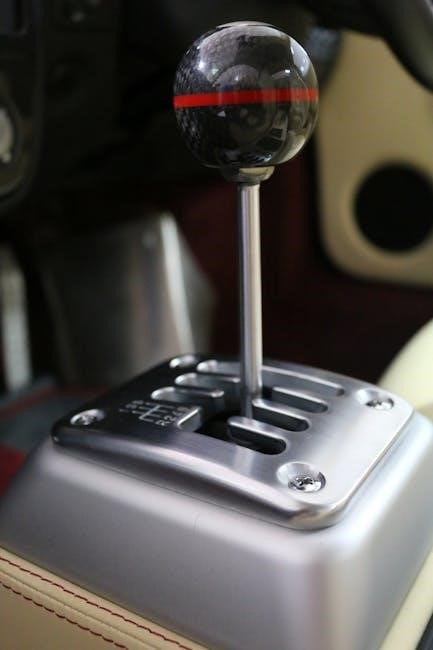
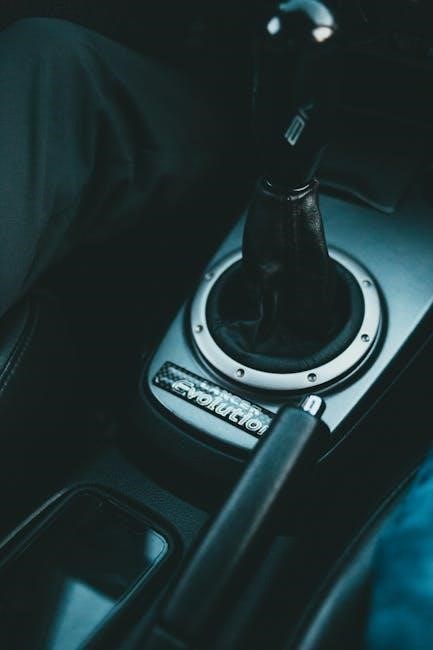
The gear stick, typically positioned between the driver and passenger seats, is your primary control for selecting gears in a manual transmission vehicle.
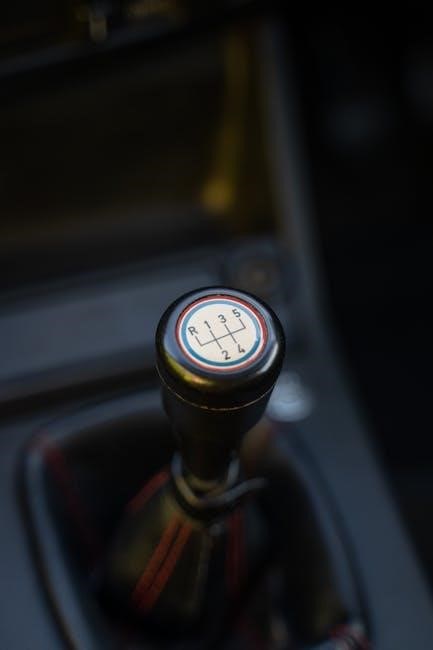
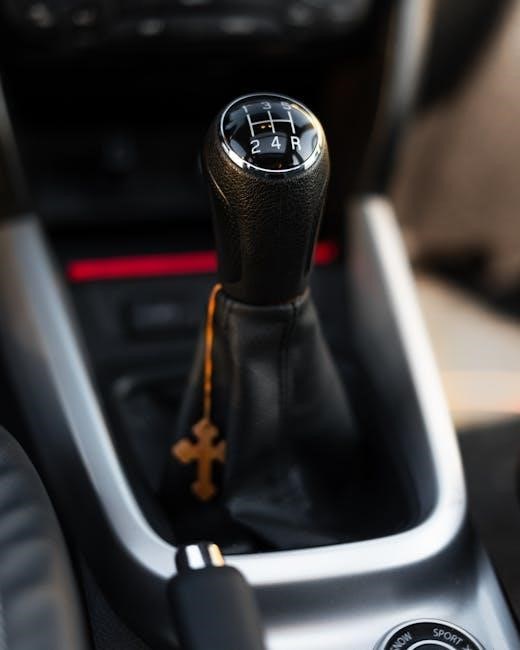
Familiarize yourself with the gear pattern – usually displayed on the knob – indicating the position for each gear (1st, 2nd, 3rd, 4th, 5th, and Reverse).
Understand that pressing the clutch pedal fully to the floor is essential before shifting gears.
Practice locating each gear without looking, ensuring smooth and precise movements. Reverse gear often requires lifting a collar or pressing down on the stick; consult the owner’s manual for specifics.
Clutch Pedal Feel and Adjustment
The clutch pedal is crucial for smooth gear changes; mastering its feel is paramount. It should have a defined engagement point – the spot where the engine begins to connect to the transmission.
A smooth, progressive pedal feel is ideal. If it feels overly stiff or spongy, or engages very high or low, it could indicate an issue.
Before driving, gently press the clutch to understand its travel and engagement point.
Avoid “riding” the clutch (partially depressing it while driving), as this causes wear. Adjust your driving style to utilize full clutch engagement and disengagement.
Driving a Rental Manual: Key Techniques
Mastering smooth starts, hill starts utilizing the handbrake, and precise downshifting with engine braking are essential for a confident manual driving experience.
Smooth Starts and Avoiding Stalling
Successfully launching a manual rental requires coordinating the clutch and accelerator. Gently release the clutch while simultaneously applying steady pressure to the gas pedal. Finding the “friction point” – where the engine begins to engage – is key.
Avoid releasing the clutch too quickly, as this will likely cause the engine to stall. If stalling occurs, don’t panic! Simply depress the clutch fully, restart the engine, and try again with a more gradual release. Practice in a safe, open area to build confidence before tackling traffic. Remember, smooth starts minimize wear and tear on the clutch.
Hill Starts: Mastering the Handbrake Technique
Starting on an incline in a manual rental demands a specific technique to prevent rolling backward. Engage the handbrake firmly. Then, follow the standard starting procedure: clutch in, first gear selected, and gently apply the accelerator.
As you feel the engine engage and reach the friction point, slowly release the handbrake while simultaneously increasing pressure on the accelerator; Coordination is vital! Practice this maneuver to develop muscle memory. If unsure, err on the side of holding the handbrake a fraction longer to ensure a controlled start.
Downshifting and Engine Braking
Downshifting allows you to utilize the engine’s resistance to slow the vehicle, reducing wear on the brakes – a valuable skill in a rental. Before a turn or descent, gently depress the clutch, shift to a lower gear (e.g., from 4th to 3rd), and smoothly release the clutch.
“Rev matching” – briefly tapping the accelerator during the downshift – creates a smoother transition and prevents jarring. Engine braking isn’t a replacement for brakes, but a supplementary technique. Avoid downshifting aggressively, especially at high speeds, to maintain control and prevent wheel lockup.
Potential Issues and Troubleshooting
Stalling, difficulty finding gears, or unusual transmission noises can occur; knowing how to respond quickly and safely is essential for a smooth rental experience.
Stalling the Engine: What to Do
Stalling a manual transmission rental car, especially for less experienced drivers, is a common occurrence, but easily recoverable. Immediately depress the clutch pedal fully to disengage the engine from the wheels, preventing further rollback.
Next, ensure the gear stick is in neutral. Then, restart the engine using the ignition. Once running, gently re-engage the clutch and select first gear, applying a small amount of throttle to prevent another stall.
Remember to remain calm and avoid panicking; stalling doesn’t typically cause damage, but quick reaction is key for safety and maintaining traffic flow.
Difficulty Finding Gears
Encountering trouble locating the correct gear in a rental manual car is often due to rushing or imprecise movements. Ensure the clutch pedal is fully depressed before attempting to shift, creating space for smooth gear engagement.
Slow down your shifting process and consciously guide the gear stick into the desired position; avoid forcing it. If a gear resists, try gently releasing and re-depressing the clutch while simultaneously moving the stick.
Familiarize yourself with the gear pattern before driving, and remember that practice makes perfect – it takes time to develop muscle memory for accurate gear changes.
Unusual Noises from the Transmission
Hearing grinding, whining, or clunking sounds emanating from the transmission of your rental manual car warrants immediate attention. These noises could indicate a mechanical issue requiring professional assessment.
Avoid continuing to drive if the noises are persistent or worsen, as this could lead to further damage. Contact the rental company immediately to report the problem and discuss repair or replacement options.
Document the noise – when it occurs (shifting, idling, etc.) – to provide detailed information to the rental company’s support team. Prioritize safety and avoid attempting self-repairs.
Rental Company Policies and Restrictions
Rental companies may impose mileage limits or geographical restrictions on manual transmission rentals, so carefully review the terms and conditions before booking.
Expect condition expectations upon return, ensuring the vehicle is clean and undamaged to avoid additional charges.
Mileage Limits and Manual Rentals
Rental agreements often include mileage allowances, and these can sometimes differ between automatic and manual transmission vehicles. It’s crucial to understand these limits before finalizing your booking, as exceeding them results in per-mile overage charges.
Some companies may offer unlimited mileage, but this is less common with manual rentals, potentially due to the perceived higher wear and tear associated with more engaged driving. Always confirm the specific mileage policy for the manual car you intend to rent.
Consider your planned itinerary; long road trips necessitate unlimited mileage or a generous allowance to avoid substantial extra costs. Carefully calculate your estimated distance to ensure the included mileage is sufficient.
Geographical Restrictions
Rental companies sometimes impose geographical restrictions on manual transmission vehicles, particularly for cross-border travel. These limitations stem from insurance regulations and logistical concerns regarding vehicle recovery and maintenance in different regions.
Certain countries or even specific areas within a country might be off-limits, so thoroughly review the rental agreement’s terms and conditions. Violating these restrictions can invalidate your insurance coverage and incur significant penalties.
Inquire directly with the rental agency about any geographical limitations before booking, especially if you plan to drive across state or national borders. Confirm permitted travel areas to avoid unexpected issues.
Returning the Vehicle: Condition Expectations
Upon returning a rental manual transmission car, expect a thorough inspection, similar to the initial pickup. Pay close attention to the clutch, as excessive wear or damage can lead to charges. Ensure all gears engage smoothly without grinding, indicating proper operation.
The vehicle should be returned clean, both inside and out, to avoid cleaning fees. Document any pre-existing damage during pickup to prevent being held responsible. Fuel levels must match the rental agreement’s specifications.
Confirm with the rental agent that the return inspection is satisfactory and obtain a signed receipt as proof of the vehicle’s condition.
Manuals and Documentation (Related to Vehicle Operation)
Access to the owner’s manual is vital; navigation and service manuals may also be available. Online searches quickly locate specific vehicle documentation.
Owner’s Manual Access
Locating the vehicle’s owner’s manual is paramount when renting a manual transmission car. This document provides crucial information regarding specific operation details, features, and potential quirks of that particular make and model. Rental companies should readily provide access, either physically within the vehicle or digitally through a provided link or QR code.
Understanding the manual allows renters to familiarize themselves with the gear stick layout, clutch operation specifics, and any unique driving characteristics. Don’t hesitate to ask the rental agent for assistance locating it. Furthermore, many manufacturers offer downloadable digital versions of their owner’s manuals online, offering a convenient backup resource.
Navigation Manuals (If Applicable)
If your rental manual transmission vehicle is equipped with a built-in navigation system, inquire about the availability of a corresponding navigation manual. While modern systems are often intuitive, a manual can clarify advanced features, troubleshooting steps, and map update procedures.
Understanding the navigation system’s operation is especially helpful when exploring unfamiliar areas, allowing you to focus on mastering the manual transmission. Rental companies may offer a quick tutorial, but a dedicated manual provides a more comprehensive resource. Digital versions are frequently available online from the vehicle manufacturer.
Service Manual Information (For Understanding Vehicle Mechanics)
While not typically provided with a rental, access to the vehicle’s service manual can offer deeper insight into its mechanical operation, particularly the manual transmission. This information is most useful for experienced drivers comfortable with automotive mechanics.
Understanding the transmission’s components and potential issues can aid in recognizing unusual noises or performance changes. However, attempting repairs yourself is strongly discouraged and likely violates the rental agreement. Online searches, using the vehicle’s make and model, may yield service manual excerpts or forums discussing common issues.
Finding Manuals Online
Search online using keywords related to the specific vehicle to locate owner’s, installation, or service manuals for detailed operational information.
Intertek Controller manuals are also available online, relating to various vehicle systems, and firmware updates may be accessible.
Searching for Specific Vehicle Manuals
Locating the correct manual for your rental car is surprisingly straightforward with today’s online resources. Begin by identifying the vehicle’s make, model, and year – this information is crucial for a precise search. Utilize search engines and enter specific keywords like “[Vehicle Make] [Vehicle Model] owner’s manual” or “[Vehicle Make] [Vehicle Model] service manual.”
Numerous websites compile vehicle manuals, offering downloadable PDFs or online viewing options. Remember to verify the manual’s relevance to your specific rental vehicle’s year to ensure accuracy. These manuals often contain valuable insights into the car’s features, operation, and potential troubleshooting tips, enhancing your driving experience and understanding of the vehicle.
Intertek Controller Manuals (Related to Vehicle Systems)
While less directly related to driving a manual transmission, Intertek Controller manuals can be valuable if your rental car features advanced systems governed by these controllers. Intertek provides manuals for various vehicle systems, including garage door openers and potentially components within the car’s electronic infrastructure.
Accessing these manuals – such as those for the SD28R-30 or SD29VB3S operators – might be useful if you encounter issues with auxiliary features. Though not essential for operating the manual gearbox itself, understanding related systems can contribute to a smoother rental experience and aid in troubleshooting non-driving related problems.
Firmware Update Information (If Applicable)
Modern rental vehicles increasingly rely on complex software systems. While unlikely to directly impact your ability to drive a manual transmission, firmware updates can affect the car’s overall performance and functionality. Checking for available updates, if the rental company allows access, could resolve minor glitches in infotainment or driver-assistance features.
However, attempting a firmware update during your rental period is generally discouraged. It carries a risk of interrupting critical systems and potentially voiding aspects of your rental agreement. Focus on mastering the manual transmission; leave software updates to the rental company’s maintenance schedule.
Advanced Techniques (For Experienced Drivers)
Experienced drivers can refine their skills with heel-toe downshifting and rev matching, enhancing control and performance while enjoying the rental manual transmission.
Heel-Toe Downshifting
Heel-toe downshifting is an advanced technique for experienced drivers renting manual transmission cars, seamlessly blending braking and throttle control during gear changes. This method involves simultaneously pressing the brake pedal with the ball of your foot while ‘blipping’ the throttle with your heel – or the side of your foot, depending on pedal placement.
The throttle blip raises engine RPMs to match the lower gear, preventing harsh downshifts and maintaining vehicle stability. Mastering heel-toe downshifting allows for smoother corner entry and more controlled deceleration, enhancing the driving experience in your rental car. It requires practice and a feel for the vehicle’s mechanics.
Rev Matching
Rev matching, a crucial skill when driving a rental manual transmission car, involves adjusting engine speed to synchronize with the transmission’s rotational speed before engaging a different gear. This technique minimizes drivetrain shock, resulting in smoother gear changes and reduced wear on the clutch.
Essentially, you briefly increase the engine RPMs (using the throttle) when downshifting, or allow the RPMs to fall when upshifting, to match the wheel speed. Successful rev matching creates a seamless transition, enhancing driving comfort and control in your rental vehicle, especially during spirited driving scenarios.
Performance Driving Considerations
When renting a manual transmission car for performance driving, remember rental vehicles aren’t typically equipped for track use or aggressive modifications. Prioritize responsible driving within legal limits and the vehicle’s capabilities.
Techniques like heel-toe downshifting and precise rev-matching become even more critical for maintaining control during spirited driving. Be mindful of clutch wear, as you’re responsible for any damage. Avoid prolonged high-RPM operation and harsh launches. Respect the rental agreement’s stipulations regarding usage and geographical restrictions to ensure a trouble-free experience.