Guide

outlander a practical guide for time-travelers

Outlander: A Practical Guide for Time-Travelers

Navigating the past demands preparation! This guide details utilizing scientific calculators for trigonometry, complex equations, and advanced problem-solving in physics and mathematics.

I. Understanding the Stones & Travel Mechanics

The standing stones represent a mysterious portal, yet their activation isn’t fully understood. Successful temporal displacement necessitates a grasp of mathematical principles. Scientific calculators, employing degree mode for trigonometric functions, become crucial for navigating altered spatial coordinates. Precise calculations, utilizing tools for complex numbers and equation solving, are vital. Understanding these mechanics, alongside advanced scientific notation, may offer clues to controlling and predicting travel outcomes, minimizing paradox risks.

II. Historical Preparation: 18th Century Scotland

Immersive research is paramount before embarking on your journey. Familiarize yourself with 18th-century Scottish society, utilizing online resources for comprehensive understanding. Master basic arithmetic and scientific calculations – essential for trade and resource management. A scientific calculator, though concealed, aids quick conversions and estimations. Understanding currency, bartering systems, and potential financial exploitation is crucial for survival. Prepare to adapt to limited technology and rely on mental acuity.

III. Essential Skills for Survival in the Past

Adaptability is key to thriving in a bygone era. Proficiency with a scientific calculator, discreetly employed, assists with complex calculations for trade or navigation. Mastering basic mathematical operations – addition, subtraction, multiplication, and division – is fundamental. Utilize online tools to practice these skills. Resourcefulness in problem-solving, coupled with a quick mind, will prove invaluable when facing unforeseen challenges in the 18th century.

A. Basic Medical Knowledge (18th Century Practices)

Understanding 18th-century medical limitations is crucial. While modern knowledge is advantageous, avoid overt displays. Familiarize yourself with prevalent illnesses and historical treatments – often involving herbal remedies. A scientific calculator can aid in dosage calculations based on period measurements. Recognize that sanitation was rudimentary; prioritize hygiene to mitigate disease risks. Basic wound care knowledge, utilizing available resources, is paramount for survival.

B. Self-Defense & Weaponry (Historical Accuracy)

Personal safety is paramount in the 18th century. While modern combat training is useful, adapt to period weaponry – swords, axes, and firearms. Proficiency with these tools is vital. Understand dueling customs and legal ramifications of violence. A scientific calculator won’t aid in combat, but knowledge of ballistics could prove beneficial. Avoid unnecessary confrontations; discretion is key to survival. Prioritize de-escalation and awareness of your surroundings.

C. Foraging & Wilderness Survival

Sustaining yourself requires resourcefulness. Master identifying edible plants and safe water sources – knowledge absent from a scientific calculator! Learn basic trapping and fire-starting techniques. Understand seasonal availability of resources. Familiarize yourself with local flora and fauna, recognizing potential dangers. Prioritize shelter construction and maintaining warmth. A strong understanding of wilderness survival is crucial, as reliance on modern conveniences is impossible. Careful observation and respect for the environment are essential.

IV. Social Etiquette & Avoiding Suspicion

Blending in is paramount for survival. Study 18th-century Scottish customs, hierarchy, and social graces. Master the local dialect and avoid modern slang. Dress authentically, eschewing any anachronistic clothing or accessories. Limit displays of advanced knowledge or skills. Observe and mimic local behaviors. Understand the importance of reputation and avoid attracting unwanted attention. Maintaining a low profile and respecting social norms are vital to avoid suspicion and ensure safety.

A. Language & Dialect (18th Century Scottish)

Authentic speech is crucial for acceptance. 18th-century Scottish dialect differed significantly from modern English. Research vocabulary, pronunciation, and grammatical structures. Avoid contemporary idioms and slang. Familiarize yourself with common phrases and expressions of the period. Practice speaking with a convincing accent. Listen to historical recordings or literature for guidance. Mastering the language minimizes suspicion and facilitates genuine interactions, aiding your integration into the past.

B. Dress & Appearance (Authenticity is Key)

Blending in requires meticulous attention to detail. Modern clothing is a glaring anachronism. Research 18th-century Scottish attire for your social standing. Fabrics, cuts, and colors must be period-accurate. Avoid synthetic materials and modern accessories. Hairstyles and grooming also matter. Consider undergarments and footwear. Authenticity minimizes scrutiny and enhances believability. Prioritize practicality and durability alongside historical accuracy for successful assimilation into the past.

C. Social Customs & Hierarchy

Understanding 18th-century Scottish society is crucial for survival. A rigid social hierarchy dictated interactions. Deference to superiors was paramount. Familiarity with clan structures, kinship ties, and local customs is essential. Observe etiquette regarding greetings, dining, and conversation. Avoid challenging authority or displaying modern egalitarian views. Knowledge of social graces prevents offense and minimizes suspicion, aiding seamless integration into the historical context.

V. Navigating Political Landscapes

Scotland in the 18th century was a cauldron of political unrest. The aftermath of the Jacobite Rising loomed large, with lingering loyalties and British military presence. Understanding clan dynamics, alliances, and rivalries is vital. Avoid expressing opinions on sensitive topics like the Hanoverian succession. Be aware of British Redcoat authority and colonial relations. Discretion and neutrality are paramount to avoid entanglement in dangerous political conflicts.

A. The Jacobite Rising & its Aftermath

The Jacobite Rising of 1745 profoundly shaped the Highlands. Its suppression by British forces led to harsh repercussions, including clan disarmament and cultural suppression. Avoid any discussion openly supporting the Jacobite cause. Be mindful of lingering resentment and potential informants. Understanding the political climate post-Culloden is crucial; appearing sympathetic to the Jacobites could lead to severe consequences and accusations of treason.

B. British Redcoats & Colonial Relations

British Redcoats represent authority and potential danger. Avoid direct confrontation or questioning their actions. Be aware of the ongoing tensions between Britain and its American colonies; discussions about colonial grievances are risky. Observe military movements and understand their purpose. Demonstrating knowledge of colonial affairs could raise suspicion, labeling you as a sympathizer or spy. Maintaining a neutral stance is paramount for survival.

C. Clan Dynamics & Alliances

Scottish clans operate on complex loyalty systems. Understand that allegiances shift, and feuds are deeply rooted. Identifying a clan’s chief and key members is crucial. Avoid taking sides in disputes unless absolutely necessary, and then, proceed with extreme caution. Offering assistance or gifts can foster goodwill, but be mindful of perceived obligations. Clan affiliations dictate social interactions and safety; knowledge is power.

VI. Practical Considerations: Hygiene & Health

Eighteenth-century sanitation is drastically different. Disease spreads rapidly due to poor hygiene. Prioritize boiling water for drinking and food preparation. Avoid consuming potentially contaminated food. Be aware of common illnesses and limited treatment options. Maintaining personal cleanliness is vital, though challenging. Understand that even minor injuries can become life-threatening without proper care; prevention is paramount.

A. Sanitation & Disease Prevention

Eighteenth-century life lacked modern sanitation. Human and animal waste were commonplace, fostering disease. Prioritize boiling all water before consumption to eliminate pathogens. Thoroughly cook all food, avoiding raw meats or questionable sources. Practice diligent handwashing with available materials – ash and water are better than nothing. Be mindful of open wounds and potential infection risks.

B. Food & Water Safety

Securing safe sustenance is paramount. Water sources were often contaminated; boiling remains crucial. Food preservation was limited – salting, smoking, and drying were common. Avoid unfamiliar plants and mushrooms. Inspect meat for spoilage. Be wary of milk and dairy products, as pasteurization didn’t exist. Prioritize cooked foods and understand the risks associated with foraging for wild edibles.

C. Common Illnesses & Treatments (Historical)

Expect limited medical intervention. Dysentery, typhoid, and influenza were rampant. Treatments relied heavily on herbal remedies, bloodletting, and purging – often ineffective or harmful by modern standards. Infection from even minor wounds was a significant threat. Understand the prevalence of smallpox and the rudimentary inoculation practices. Prepare for limited sanitation and the lack of antibiotics.

VII. Financial Matters & Trade

Currency will differ drastically. Familiarize yourself with the Scottish pound sterling and its fluctuating value. Bartering was commonplace, especially in rural areas. Obtaining resources requires employment – consider skills transferable to the 18th century. Beware of exploitation; merchants may inflate prices for outsiders. Understanding trade routes and local markets is crucial for financial stability and avoiding suspicion.

A. Currency & Bartering Systems

The Scottish pound held complex values. Silver and copper coins were common, but often scarce. Bartering – exchanging goods and services – thrived, particularly for necessities. Understand the relative worth of items: livestock, textiles, and tools held significant value. Familiarize yourself with weights and measures. Be cautious of counterfeit currency and fluctuating exchange rates; knowledge is your financial safeguard.

B. Obtaining Resources & Employment

Securing sustenance requires adaptability. Opportunities exist as a domestic servant, farmhand, or skilled artisan – if your skills align. Women might find work in weaving or midwifery. Be prepared for arduous labor and low wages. Bartering remains vital. Establishing trust is paramount; a reputation for honesty unlocks opportunities. Avoid attracting undue attention with unexplained wealth or abilities.

C. Avoiding Financial Exploitation

Vigilance protects your limited funds. Understand 18th-century currency and bartering values. Merchants may inflate prices for outsiders. Carefully inspect goods before purchase. Avoid lending money – recovery is unlikely. Be wary of “opportunities” promising quick riches; scams are prevalent. Document all transactions. A local advocate, earned through trust, can safeguard against unfair dealings and predatory practices.

VIII. Communication & Information Gathering

Discreetly acquire knowledge. Literacy is uncommon; rely on observation and oral tradition. Storytelling reveals societal norms and hidden truths. Cultivate trusted contacts for intelligence, but beware of rumors. Avoid displaying advanced knowledge or writing skills. Master the local dialect to blend in and understand nuanced conversations. Careful listening is paramount; information is power, and silence is golden.

A. Literacy & Written Communication

Minimize written traces. Widespread literacy is absent; your skills will attract unwanted attention. Avoid writing unless absolutely necessary, and then use period-appropriate materials and handwriting. If compelled to write, adopt a simple style mirroring the era. Conceal modern grammar and vocabulary. Prioritize oral communication and rely on trusted individuals for limited correspondence, understanding the risks involved.

B. Oral Tradition & Storytelling

Master the art of storytelling. Information spreads primarily through word of mouth. Cultivate a knack for recounting tales, remembering genealogies, and participating in local lore. Listen intently to gather intelligence and discern truth from rumor. Adapt your narratives to fit the cultural context, avoiding anachronisms. Become a skilled listener; observing reactions reveals much about the community’s beliefs and suspicions.

C. Gathering Intelligence & Avoiding Rumors

Discretion is paramount. Carefully assess information sources, recognizing that gossip thrives. Prioritize direct observation and verified accounts. Cultivate relationships with individuals known for reliability, but remain cautious. Avoid openly seeking information that might arouse suspicion. Blend into the background, listening more than speaking, and subtly glean insights into local events and power dynamics.

IX. Dealing with Technological Disparity

Minimize your footprint. Conceal modern knowledge and skills; avoid demonstrating abilities beyond the era’s understanding. Adapt to limited technology, relying on ingenuity and resourcefulness. The paradox problem is real – minimal interference is crucial. Resist the urge to “improve” the past. Focus on blending in, utilizing existing tools, and avoiding actions that could drastically alter the timeline’s course.

A. Concealing Modern Knowledge & Skills

Subtlety is paramount. Avoid displaying advanced mathematical or scientific understanding, especially utilizing tools like scientific calculators for complex problems. Downplay expertise; feign ignorance when questioned about concepts beyond the 18th century. Focus on practical skills readily accepted within the period. Remember, appearing too knowledgeable invites suspicion and potentially dangerous scrutiny. Blend in, observe, and learn to mimic the era’s intellectual limitations.

B. Adapting to Limited Technology

Embrace simplicity. The absence of modern conveniences requires resourcefulness. Master basic arithmetic and rely on manual calculations, mirroring the era’s reliance on tools like simple calculators for fundamental tasks. Forget instant communication; letters are paramount. Accept slower travel and limited access to information. Adapt to a world without readily available data, fostering patience and observational skills. Technological disparity demands a shift in mindset and practical abilities.

C. The Paradox Problem & Minimal Interference

Preserve the timeline. Avoid altering significant events; even small changes could have unforeseen consequences. Conceal modern knowledge and skills to prevent disrupting the natural course of history. Observe, but do not actively participate in shaping outcomes. Prioritize blending in and minimizing your footprint. Remember, the past is fragile; interference risks creating paradoxes and jeopardizing your own future. Strict adherence to non-intervention is crucial for survival.

X. Potential Dangers & Risks

The 18th century presents numerous threats. Warfare and violence are commonplace, demanding constant vigilance. Disease and injury, lacking modern medicine, pose significant risks to health. Social outcasting and persecution await those perceived as different or threatening. Be prepared for harsh conditions, limited resources, and the constant possibility of danger. Maintaining a low profile and avoiding unnecessary attention are paramount for survival in this volatile era.

A. Warfare & Violence

Conflict permeated 18th-century life. The Jacobite uprisings and ongoing clan feuds created a landscape of potential violence. Travel was hazardous, with highwaymen and raiding parties posing constant threats. Military presence, including British Redcoats, meant encounters could quickly escalate. Understanding weaponry and basic self-defense is crucial. Avoid political discussions and demonstrations, as even minor offenses could lead to severe consequences or imprisonment.

B. Disease & Injury

Medical care was primitive and dangerous. Sanitation was poor, leading to rampant disease – smallpox, dysentery, and influenza were common. Even minor injuries could become life-threatening due to infection. Possessing basic medical knowledge, even herbal remedies, is vital. Avoid contaminated water and food. Be prepared for limited treatment options and the high risk of mortality from even seemingly simple ailments. Prioritize preventative measures above all else.

C. Social Outcasting & Persecution

Deviation from norms invited suspicion and harsh consequences. Unusual knowledge, speech, or behavior could lead to accusations of witchcraft or being an English spy. Maintaining a low profile and conforming to societal expectations is crucial for survival. Avoid displays of modern thinking or skills. Be mindful of religious beliefs and clan allegiances. Outsiders faced distrust; blending in is paramount to avoid persecution and ensure safety.

XI. The Role of Fate & Free Will

The question of destiny versus agency is central to time travel. Are events predetermined, or can actions alter the course of history? Minimal interference is vital to avoid paradoxes. Observe, but resist the urge to significantly change outcomes. Accepting a degree of predetermination while exercising cautious free will offers a balanced approach. Understand that even small actions can have unforeseen repercussions across time.

XII. Identifying & Understanding Key Historical Figures

Thorough research is paramount before interacting with individuals from the past. Knowing their motivations, allegiances, and potential influence is crucial for self-preservation. Avoid revealing future knowledge that could alter their actions or raise suspicion. Focus on observing their behaviors and understanding the political landscape surrounding them. Accurate assessment minimizes risks and ensures a lower profile during your temporal sojourn.

XIII. The Importance of Documentation & Observation

Meticulous record-keeping is vital, yet discreetly done. Document daily life, social customs, and political events without attracting attention. Utilize a cipher or code for sensitive information. Observation skills are key to understanding nuances and avoiding cultural faux pas. Detailed notes aid in adapting and navigating the past, while minimizing interference with the established timeline. Remember, knowledge is power, and careful observation is your greatest asset.

XIV. Building a Support Network (Cautiously)

Establishing trust is paramount, but fraught with risk. Seek individuals demonstrating loyalty and discretion. Avoid revealing your origins; fabricate a plausible backstory. Offer skills – basic medical knowledge, perhaps – in exchange for assistance. Be wary of political affiliations and clan rivalries. A small, reliable network can provide vital resources, protection, and information, but maintain constant vigilance against betrayal or exposure.

XV. Understanding Scottish Law & Justice (18th Century)

The legal system differed drastically from modern standards. Clan chiefs often administered justice locally, with trials by ordeal or compurgation common. Heritable jurisdictions granted landowners judicial power. Avoid attracting attention from authorities; even minor offenses could lead to severe punishment. Familiarize yourself with concepts like “benefit of clergy” and the role of witnesses. Discretion and adherence to local customs are crucial for avoiding legal entanglements.

XVI. The Impact of Time Travel on Mental Health

Temporal displacement induces significant psychological stress. Expect culture shock, grief over lost connections, and existential anxieties. Maintaining a consistent identity while adapting to a new era is challenging. Develop coping mechanisms – journaling, mindfulness, or finding a trusted confidant (cautiously!). Recognize symptoms of trauma and prioritize mental wellbeing. The paradox of knowledge and the inability to alter major events can be profoundly unsettling.

XVII. Ethical Considerations of Time Travel

Interference carries immense responsibility. The “minimal interference” principle is paramount; avoid altering established timelines. Even seemingly small actions can have unforeseen consequences. Resist the urge to profit from future knowledge or prevent personal tragedies. Prioritize observation and documentation over intervention. Consider the potential harm to individuals and the broader historical narrative. Respect the past, even its imperfections.

XVIII. Utilizing Scientific Principles for Survival (Basic Physics/Chemistry)

Leverage fundamental knowledge discreetly. Understanding basic physics aids in constructing simple tools and shelters. Chemistry principles assist in water purification and identifying edible plants – crucial for survival. Employing a scientific calculator, even for seemingly simple tasks, can provide a significant advantage. Remember to conceal advanced calculations and maintain a low profile.

XIX. Navigation Without Modern Tools (Celestial Navigation)

Master the stars for orientation. Celestial navigation, using the sun, moon, and stars, becomes essential without GPS. Learn to determine latitude using constellations and the North Star. A scientific calculator, while concealed, can aid in precise angle measurements. Practice regularly; accurate navigation prevents getting hopelessly lost in unfamiliar terrain, ensuring survival and successful travel.

XX. The Significance of Local Folklore & Superstition

Respect beliefs, even if you don’t share them. 18th-century Scotland was steeped in folklore; dismissing it invites suspicion and potential danger. Understanding local superstitions – regarding fairies, second sight, or omens – is crucial for social acceptance. While a scientific mindset prevails, outwardly acknowledging these beliefs can foster trust and avoid unwanted attention. Blend in, observe, and learn the local narratives.

XXI. Preparing for Long-Term Residency

Adaptation is key to survival. Long-term stays necessitate establishing a sustainable life. Secure reliable resources – land, employment, or trade – and master essential skills like farming or crafting; Cultivate relationships cautiously, building a support network while concealing your origins. Financial stability through bartering or legitimate work is paramount. Prioritize hygiene and health, understanding 18th-century limitations.

XXII. Returning to Your Own Time (If Possible)

Reintegration presents unique challenges. If returning is feasible, meticulously document observations – historical details, societal shifts – but avoid altering the timeline. Prepare for potential paradoxes and the psychological impact of displacement. Expect cultural shock and technological disparity. Secure resources for readjustment and cautiously reveal experiences, understanding disbelief is likely. Prioritize mental health support post-transition.

XXIII. Contingency Planning & Emergency Protocols

Unforeseen events are inevitable. Develop escape routes, secure hidden resources, and establish coded communication methods. Master basic medical skills for injury and disease. Anticipate political unrest and potential violence. Learn self-defense techniques. Prepare for financial hardship and resource scarcity. Prioritize discretion and avoid attracting unwanted attention. A detailed plan minimizes risk and maximizes survival chances.

PDF

senior menu at perkins pdf

Perkins Restaurant & Bakery: A Comprehensive Guide to the Senior Menu (2026)

As of April 14, 2026, accessing the 55+ menu involves visiting the Perkins website, navigating to the menu section, and selecting the dedicated senior offerings․

History of Perkins Restaurant & Bakery

Founded in 1958 as a modest pancake house in Ohio, Perkins Restaurant & Bakery has blossomed into a widespread dining establishment․ Today, the brand boasts nearly 300 locations spanning 32 states and Canada, with approximately 85 restaurants under company ownership․ This growth reflects a consistent dedication to providing satisfying dining experiences and exceptional service․

Throughout its history, Perkins has prioritized customer satisfaction, embracing a “Kindness Served Daily” philosophy․ While the initial focus was on breakfast fare, the menu expanded over the decades to encompass a diverse range of options for lunch and dinner․ The introduction of a dedicated 55+ menu demonstrates a continued commitment to catering to the specific needs and preferences of its senior clientele, ensuring a welcoming and enjoyable experience for all․

Perkins’ Commitment to Customer Satisfaction

Perkins Restaurant & Bakery consistently emphasizes delivering 100% customer satisfaction, a cornerstone of its operational philosophy․ This dedication manifests through service excellence and a positive dining atmosphere, fostering a loyal customer base․ Reviews, such as those found on Tripadvisor, frequently highlight the warm and accommodating nature of the waitstaff, particularly when serving senior patrons utilizing the 55+ menu․

The focus on kindness and attentive service extends to understanding the unique needs of older diners․ By offering a specialized menu and ensuring a comfortable environment, Perkins demonstrates a genuine commitment to providing a pleasurable experience․ This proactive approach to customer care solidifies Perkins’ reputation as a senior-friendly dining destination․

The 55+ Menu: An Overview

Perkins Restaurant & Bakery’s 55+ menu is specifically designed to cater to the preferences and dietary considerations of guests aged 55 and above․ While a direct “Perkins Senior Menu PDF” isn’t prominently advertised, the menu is readily accessible online through the restaurant’s official website․ It features a curated selection of breakfast, lunch, and dinner options, often with portion sizes and pricing tailored for seniors․

The menu’s strength lies in its focused approach, offering familiar favorites alongside lighter choices․ Customer feedback consistently praises the menu’s relevance and the staff’s willingness to accommodate special requests, ensuring a satisfying dining experience for this valued demographic․

Understanding the Perkins Senior Menu

Currently (April 14, 2026), the 55+ menu is found on the Perkins website; a dedicated PDF download isn’t readily available to customers․

Target Audience & Benefits

Perkins’ 55+ menu is specifically designed for guests aged 55 and over, recognizing their unique dining preferences and potential dietary needs․ This demographic often appreciates thoughtfully portioned meals and familiar comfort foods․ The menu aims to provide a satisfying and enjoyable dining experience tailored to this valued customer base․

While a dedicated PDF isn’t prominently featured as of April 14, 2026, the online menu offers easy access to options․ Benefits include potentially smaller portion sizes, appealing price points, and a warm, accommodating atmosphere highlighted in recent Tripadvisor reviews․ Perkins emphasizes “Kindness Served Daily,” fostering a positive experience for senior diners․ The focus is on delivering 100% satisfaction through excellent service and a welcoming environment․

Menu Availability & Accessing the PDF

Currently (April 14, 2026), Perkins Restaurant & Bakery does not prominently feature a dedicated, downloadable PDF specifically for the 55+ menu․ However, the senior menu options are readily accessible through the restaurant’s official website․ Guests can navigate to the “Menu” section and then select the “55 Plus Menu” to view available choices․

Information suggests direct PDF access may be limited, requiring online browsing․ Alternatively, physical copies of the 55+ menu are typically available at participating restaurant locations․ It’s recommended to inquire with your local Perkins for the most up-to-date availability of printed menus․ Digital access ensures the most current offerings are displayed․

Key Dietary Considerations for Seniors Addressed

Perkins demonstrates a thoughtful approach to senior nutritional needs through its 55+ menu․ While a specific PDF detailing these considerations isn’t readily available, the menu’s design implicitly addresses common senior dietary requirements․ Portion sizes are generally moderate, aiding in digestive comfort and weight management․

The menu offers lighter options and allows for substitutions to accommodate preferences and health concerns․ Perkins’ commitment to “Kindness Served Daily” extends to menu flexibility․ Though not explicitly stated in a downloadable document, the focus is on providing balanced, appealing meals suitable for mature palates and potential dietary restrictions․

Detailed Breakdown of Senior Menu Options

Currently (April 14, 2026), a dedicated PDF outlining all senior menu options isn’t publicly available; however, the website details breakfast, lunch, and dinner choices․

Breakfast Selections

As of today, April 14, 2026, while a specific downloadable PDF for the senior menu isn’t readily available, Perkins offers a variety of breakfast choices appealing to mature palates․ These include classic pancake options – a nod to the restaurant’s 1958 origins as a pancake house – alongside omelets prepared to order with diverse fillings․

Guests can also enjoy lighter fare like oatmeal or yogurt with fruit․ The focus, according to Tripadvisor reviews, is on a well-focused menu catering to senior preferences․ While precise details require navigating the online menu directly, expect traditional breakfast staples presented with Perkins’ commitment to service and quality․ The availability of specific breakfast items may vary by location․

Lunch & Dinner Entrees

Currently, on April 14, 2026, a dedicated PDF detailing the Perkins senior menu isn’t widely publicized, but the 55+ offerings include thoughtfully selected lunch and dinner entrees․ These generally feature lighter preparations and portion sizes suitable for senior appetites․ Expect classic comfort food options like grilled chicken, fish dishes, and hearty sandwiches, often served with a choice of sides․

Tripadvisor feedback highlights the menu’s focus on senior preferences, suggesting a balance of familiar flavors and manageable portions․ While specific entree details require checking the Perkins website, anticipate options designed for enjoyable and satisfying dining experiences․ The warm and accommodating wait staff further enhances the overall experience․

Side Dish Options

As of today, April 14, 2026, a readily available PDF of the Perkins senior menu is elusive, however, side dish selections typically complement the entrees geared towards the 55+ demographic․ Expect choices that prioritize both flavor and dietary considerations․ Common options likely include steamed vegetables, such as broccoli or green beans, alongside lighter alternatives like side salads with dressings available on the side․

Perkins aims for customer satisfaction, and sides are often customizable․ Reviews suggest a focus on providing balanced meals․ While a specific list isn’t currently in a downloadable PDF, anticipate options that cater to senior preferences for healthier and appropriately portioned accompaniments․

Dessert Choices

Currently, on April 14, 2026, a dedicated PDF detailing the Perkins senior menu isn’t widely accessible, but dessert options traditionally offer a sweet finish tailored to mature palates․ While specific senior-focused desserts aren’t explicitly highlighted in available information, Perkins Bakery is renowned for its pies, cakes, and other treats;

Expect smaller portion sizes or lighter variations of classic desserts to align with senior dietary needs․ Customer feedback emphasizes the warm and accommodating service, suggesting potential flexibility in dessert choices․ Though a PDF isn’t available, anticipate familiar favorites alongside seasonal selections, providing a delightful conclusion to the dining experience․

Pricing & Value of the Senior Menu

As of today, April 14, 2026, a specific PDF outlining senior menu pricing isn’t readily available; value is assessed through customer satisfaction reports․

Cost Comparison with Regular Menu

Currently, on April 14, 2026, a dedicated PDF detailing a direct price comparison between the standard Perkins menu and the 55+ offerings remains elusive․ However, customer feedback, specifically from Tripadvisor reviews, consistently highlights the senior menu as providing excellent value․ While precise figures aren’t publicly available in a downloadable format, anecdotal evidence suggests modest savings on select entrees and combinations․

The perceived value extends beyond purely monetary considerations; the senior menu often features portion sizes tailored to older adults, potentially reducing food waste and overall cost․ Furthermore, the attentive and accommodating service frequently mentioned in reviews contributes to a positive dining experience, enhancing the overall value proposition․ Obtaining a precise cost breakdown necessitates a direct comparison at the point of sale within a Perkins restaurant․

Potential Discounts & Promotions

As of today, April 14, 2026, Perkins Restaurant & Bakery doesn’t widely advertise specific, dedicated discounts exclusively for the 55+ menu in a readily available PDF format․ However, the “Kindness Served Daily” philosophy suggests a willingness to accommodate senior customers․ Local franchise participation may vary, meaning some locations might offer unadvertised specials or discounts upon inquiry․

Checking with individual Perkins restaurants directly is recommended to ascertain any ongoing promotions․ Furthermore, joining the Perkins Rewards program could unlock potential savings applicable to senior menu items․ While a comprehensive list isn’t currently published, attentive waitstaff, as noted in Tripadvisor reviews, are often helpful in identifying available deals or customizing orders to fit budgetary needs․

Value for Money Assessment

Evaluating the Perkins senior menu’s value (April 14, 2026) requires comparing prices to both the regular menu and competitor offerings․ Tripadvisor feedback highlights the menu’s focus on senior preferences and accommodating service, contributing to perceived value․ While a dedicated PDF doesn’t detail specific cost savings, portion sizes appear reasonable for the price point, catering to potentially smaller appetites․

Considering the restaurant’s commitment to customer satisfaction and the warm, accommodating staff mentioned in reviews, the overall dining experience enhances the value proposition․ The menu provides familiar comfort food options, potentially justifying a slightly higher price than fast-food alternatives, especially when factoring in the full-service dining atmosphere․

Perkins Locations & Accessibility

Currently (April 14, 2026), nearly 300 Perkins restaurants exist across 32 states and Canada, with approximately 85 company-owned locations offering the senior menu․

Finding a Perkins Restaurant Near You

Locating a Perkins offering the 55+ menu is straightforward․ As of today, April 14, 2026, nearly 300 Perkins Restaurant & Bakery locations span 32 states and Canada․ Approximately 85 of these are company-owned, consistently upholding brand standards, including the senior menu availability․ To pinpoint the nearest restaurant, utilize the official Perkins website’s store locator feature․ Input your city, state, or zip code to generate a list of nearby options․

Confirming senior menu availability is recommended by directly contacting the chosen location․ Tripadvisor reviews frequently highlight positive experiences with the senior menu and accommodating staff at various Perkins restaurants, particularly in areas like Port Charlotte, Florida․ This proactive step ensures a satisfying dining experience tailored to senior preferences․

Restaurant Ambiance & Senior-Friendly Features

Perkins Restaurant & Bakery generally cultivates a warm and inviting atmosphere, aligning with their “Kindness Served Daily” philosophy․ This translates to a comfortable dining experience particularly appreciated by senior patrons․ Reviews, such as those found on Tripadvisor, consistently praise the accommodating and attentive waitstaff, creating a positive environment․ While specific features vary by location, many Perkins restaurants prioritize accessibility and ease of navigation․

Considerations for seniors include comfortable seating arrangements and appropriate lighting levels․ The focus on service excellence ensures staff are readily available to assist with menu navigation, including the 55+ options, and address any dietary needs or preferences․ This dedication contributes to a relaxed and enjoyable meal for all guests․

Accessibility for Individuals with Disabilities

Perkins Restaurant & Bakery strives to provide accessible dining experiences for all customers, including those with disabilities․ While specific accessibility features may differ between locations, many restaurants are designed with inclusivity in mind․ This often includes wheelchair-accessible entrances, restrooms, and seating arrangements․ The commitment to “Kindness Served Daily” extends to providing attentive service to guests with diverse needs․

Staff members are generally trained to assist individuals requiring accommodations, ensuring a comfortable and dignified dining experience․ Further details regarding accessibility at specific Perkins locations can typically be found by contacting the restaurant directly․ Information regarding the senior menu (55+) is readily available online, aiding in pre-visit planning․

Perkins Engines & Related Businesses (Contextual Information)

Notably, Perkins Restaurant & Bakery is distinct from Perkins Engines, a diesel engine manufacturer; Deutz Cummins Perkins Hatz is a distributor in Novosibirsk․

Perkins Engines: A Separate Entity

It’s crucial to understand that Perkins Restaurant & Bakery operates as a completely independent entity from Perkins Engines Company Limited․ While sharing a historical origin, the two businesses have diverged significantly over time․ Perkins Engines specializes in the design, manufacture, and supply of diesel engines for a diverse range of applications, including agricultural machinery, construction equipment, power generation systems, and industrial uses․

They are not involved in the restaurant’s operations, including the development or management of the 55+ senior menu․ Perkins Engines focuses on engine performance, reliability, and durability, serving global markets through a network of distributors and service locations․ Confusion sometimes arises due to the shared name, but their core businesses are entirely separate and unrelated to senior dining options․

Perkins Distributors & Service Locations

Locating a Perkins engine distributor is straightforward through their official online locator tool․ Users can input their address, city, state, postal code, or country to pinpoint nearby service centers․ This network ensures readily available support for Perkins engines globally, offering maintenance, repairs, and genuine parts․ Notably, Deutz Cummins Perkins Hatz in Novosibirsk, Russia (Станционная, 38в), serves as a key distributor, providing comprehensive engine services․

However, these distributors are entirely unrelated to the Perkins Restaurant & Bakery senior menu․ Their expertise lies solely in engine technology and support, not in restaurant dining experiences or senior-focused meal options․ Finding information about the 55+ menu requires visiting the restaurant’s website directly․

Deutz Cummins Perkins Hatz (Novosibirsk)

Located at Станционная, 38в in Novosibirsk, Russia, Deutz Cummins Perkins Hatz operates as a significant distributor and service provider for Perkins engines․ They specialize in engine repair, generator servicing, and starter maintenance, offering a wide range of diesel generators powered by Perkins engines․ Contactable at +7 (383) 383-28-88, they represent Perkins, Caterpillar, and Baudouin brands․

It’s crucial to understand this entity has absolutely no connection to the Perkins Restaurant & Bakery senior menu or its associated PDF․ Their focus is exclusively on industrial engines and related services․ Information regarding the 55+ menu, including access to a potential PDF version, is found solely on the Perkins Restaurant & Bakery website․

Customer Reviews & Feedback on the Senior Menu

Tripadvisor reviews highlight the senior menu’s focus and accommodating waitstaff, though information regarding a downloadable PDF isn’t readily available in feedback․

Tripadvisor Reviews: Senior Menu Highlights

Recent Tripadvisor reviews consistently praise Perkins Restaurant & Bakery’s senior menu, particularly noting its thoughtful design catering to older adults’ preferences․ Customers frequently commend the menu’s focus, offering familiar and comforting dishes in appropriate portion sizes․ Many reviewers specifically mention the warm and accommodating nature of the waitstaff, creating a positive dining experience․

However, a recurring theme within the reviews is the lack of readily available information regarding a downloadable PDF version of the 55+ menu․ While customers appreciate the menu itself, several express a desire for easier access to view options and pricing online before visiting․ This suggests a potential area for improvement in Perkins’ digital accessibility, allowing seniors to conveniently plan their meals․

Common Themes in Customer Feedback

Analyzing customer feedback reveals consistent satisfaction with the Perkins senior menu’s food quality and portion sizes, deemed appropriate for older appetites․ The “Kindness Served Daily” philosophy translates well in service, with staff frequently lauded for their patience and attentiveness towards senior diners․ However, a significant recurring request centers around improved digital accessibility․

Many customers express frustration with the difficulty in locating a readily available PDF version of the 55+ menu online․ This hinders pre-visit meal planning, particularly for those with dietary restrictions or mobility concerns․ The desire for a downloadable menu underscores a need for Perkins to enhance its online resources, catering specifically to the preferences of its senior clientele and improving overall convenience․

Addressing Potential Concerns & Improvements

Perkins should prioritize creating a dedicated, easily accessible PDF of the 55+ menu on their website, addressing the prevalent customer request․ This simple step would significantly enhance convenience for seniors planning visits, especially those managing dietary needs․ Furthermore, optimizing the website for screen readers and larger font sizes is crucial for inclusivity․

Addressing concerns about menu variety could involve rotating seasonal senior specials and soliciting direct feedback from this demographic․ Maintaining consistent service quality, as currently praised, is paramount․ Perkins’ commitment to “Kindness Served Daily” should extend to proactively accommodating senior diners’ preferences, solidifying its reputation as a senior-friendly establishment and boosting customer loyalty․

Perkins Menu Updates & Changes (2026 Outlook)

Expect digital menu access and updates, potentially including a downloadable PDF of the 55+ menu, alongside seasonal senior items for varied dining options․

Expected Menu Modifications

Looking ahead to 2026, Perkins Restaurant & Bakery is anticipated to refine its 55+ menu based on customer feedback and evolving dietary preferences․ While a dedicated PDF version currently facilitates access, expect potential enhancements to the digital presentation, possibly incorporating interactive features․ Modifications may include adjustments to portion sizes, catering to senior appetites, and the introduction of heart-healthy options․

Furthermore, Perkins is likely to explore expanding the menu with seasonal specials designed specifically for seniors, utilizing fresh ingredients․ The focus remains on delivering 100% customer satisfaction, and menu changes will reflect this commitment․ Accessibility of the senior menu, whether through a PDF or online platform, will remain a priority, ensuring ease of use for all patrons․

Seasonal Menu Items for Seniors

Perkins Restaurant & Bakery anticipates introducing rotating seasonal items to its 55+ menu throughout 2026, enhancing variety and catering to fresh ingredient availability․ These limited-time offerings, accessible via the standard menu and potentially a dedicated PDF update, will complement existing senior favorites․ Expect lighter fare during warmer months – perhaps fruit-focused breakfasts or salads – and heartier options in fall and winter, like comforting soups and stews․

These seasonal additions will be designed with senior dietary needs in mind, offering balanced and flavorful choices․ The goal is to provide exciting new options while maintaining the menu’s focus on value and satisfaction․ Updates to the PDF version will reflect these changes, ensuring seniors remain informed․

Digital Menu Access & Updates

Perkins Restaurant & Bakery is prioritizing digital accessibility for its 55+ menu in 2026, recognizing the growing preference for online information․ The most current senior menu, including any modifications or seasonal additions, will be readily available as a downloadable PDF directly on the Perkins website․ This ensures seniors can easily review options before dining․

Furthermore, Perkins plans to implement dynamic menu updates on its website and potentially through a dedicated app, offering real-time changes and nutritional information․ Regular PDF updates will also be posted, clearly indicating revision dates․ This commitment to digital convenience aims to enhance the dining experience for all customers, particularly those aged 55 and above․

Instructions

costco frozen pizza baking instructions

Costco Frozen Pizza Baking Instructions: A Comprehensive Guide

Navigating the Costco experience requires understanding online shopping options and app features. Members can locate stores‚ check hours‚ and potentially access exclusive benefits through the Costco app and website.

Understanding Costco Frozen Pizza Varieties

Costco’s frozen pizza selection is remarkably diverse‚ catering to a wide range of tastes and preferences. Beyond the ubiquitous Kirkland Signature options‚ shoppers can discover a rotating assortment of branded pizzas‚ often including popular choices like California Pizza Kitchen and Motor City Pizza. Understanding these variations is crucial for optimizing baking instructions.

Kirkland Signature pizzas generally fall into several categories: classic cheese‚ pepperoni‚ combination‚ and specialty options like Margherita or supreme. These are typically larger‚ designed for family-style meals. Branded pizzas often come in smaller sizes and feature unique flavor profiles and crust styles. The type of crust – thin crust‚ rising crust‚ or traditional – significantly impacts baking time and temperature.

Furthermore‚ Costco frequently introduces seasonal or limited-edition pizzas‚ adding to the variety. Paying attention to the specific pizza type is essential‚ as instructions can vary. Always check the packaging for the manufacturer’s recommended baking guidelines‚ as these override general advice. Recognizing these distinctions allows for a tailored baking approach‚ ensuring a perfectly cooked pizza every time.

Kirkland Signature vs. Other Brands: A Comparison

When comparing Kirkland Signature frozen pizzas to other brands available at Costco‚ several key differences impact baking. Kirkland pizzas are known for their substantial size and generous toppings‚ often requiring slightly longer baking times to ensure thorough cooking. Their crust tends to be thicker‚ necessitating a higher oven temperature for optimal crispness.

Branded pizzas‚ like California Pizza Kitchen or Motor City Pizza‚ typically have thinner crusts and a focus on gourmet flavor combinations. These often bake faster and may benefit from a slightly lower oven temperature to prevent burning. The ingredient quality also differs; branded options frequently utilize premium cheeses and specialty sauces.

Another distinction lies in packaging. Kirkland pizzas are usually packaged individually‚ while some brands offer multi-packs. This can influence freezing and thawing times. Ultimately‚ while both offer convenience‚ Kirkland Signature prioritizes value and quantity‚ while other brands emphasize unique flavors and potentially quicker baking times. Always consult the package instructions for the most accurate guidance.

Optimal Oven Temperature for Costco Frozen Pizzas

Determining the optimal oven temperature is crucial for achieving a perfectly baked Costco frozen pizza. While package instructions vary‚ a general guideline is to preheat your oven to 425°F (218°C). This temperature strikes a balance between cooking the toppings thoroughly and ensuring a crispy crust.

However‚ adjustments may be necessary based on your oven and the specific pizza type. For pizzas with thicker crusts‚ like some Kirkland Signature varieties‚ increasing the temperature to 450°F (232°C) can promote better browning and crispness. Conversely‚ pizzas with thinner crusts or delicate toppings may benefit from a slightly lower temperature of 400°F (204°C) to prevent burning.

Consistent oven temperature is key. Avoid opening the oven door frequently during baking‚ as this can cause temperature fluctuations; Using an oven thermometer to verify the internal temperature is recommended. Remember‚ higher temperatures generally yield crispier crusts‚ while lower temperatures prioritize even cooking of the toppings. Experimentation may be needed to find your sweet spot!

Preheating: The Key to a Crispy Crust

Preheating your oven is arguably the most critical step in achieving a restaurant-quality crispy crust with your Costco frozen pizza. A fully preheated oven ensures even heat distribution‚ allowing the pizza to cook uniformly from the start. Rushing this process often results in a soggy bottom and unevenly melted toppings.

Allow at least 20-30 minutes for your oven to reach the desired temperature‚ typically 425°F (218°C) or adjusted based on the pizza type. Using an oven thermometer to confirm the temperature is highly recommended‚ as oven dials can be inaccurate. A hot oven creates immediate surface heat‚ initiating the crucial Maillard reaction – the chemical process responsible for browning and developing that desirable crispy texture.

Furthermore‚ preheating also warms the oven rack or baking surface‚ further contributing to a crispier base. Don’t skip this step! A properly preheated oven is the foundation for a truly satisfying Costco frozen pizza experience‚ transforming a convenient meal into a delightful treat.

Baking Directly on the Oven Rack

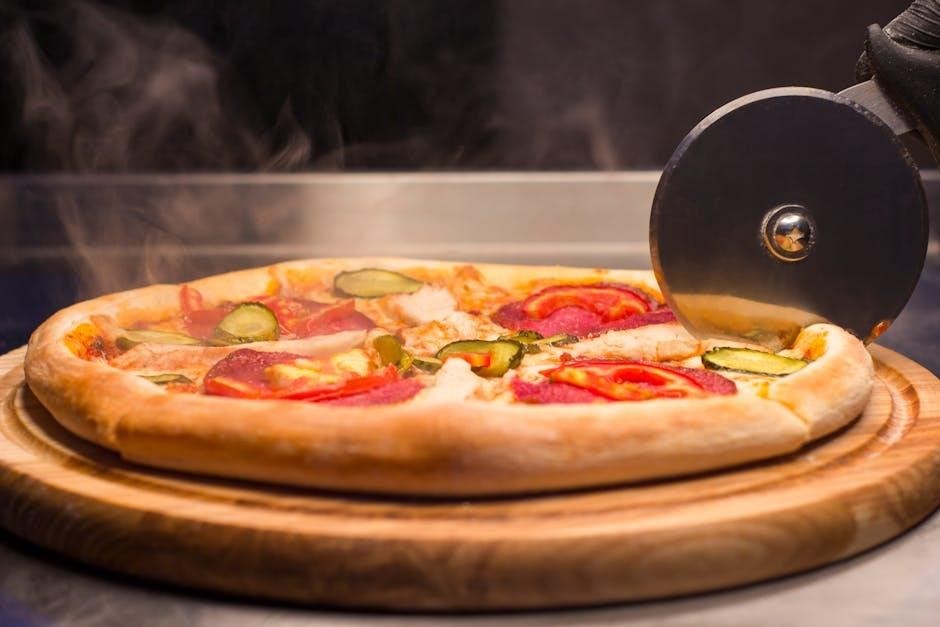
Baking a Costco frozen pizza directly on the oven rack is a popular method favored by many for achieving maximum crust crispness. This technique allows for 360-degree heat circulation‚ resulting in a uniformly cooked and delightfully crunchy base. However‚ it requires careful execution to avoid messy mishaps.

Ensure your oven rack is clean and positioned in the middle of the oven. Gently slide the frozen pizza (without the cardboard) directly onto the heated rack. Be cautious‚ as the rack will be hot! Monitor closely during baking‚ as some cheese or toppings may drip through the rack‚ potentially creating smoke or requiring oven cleaning.

This method is best suited for pizzas with sturdy crusts‚ like the Kirkland Signature varieties. Using a baking sheet underneath can mitigate dripping‚ but may slightly compromise the crust’s crispness. Remember to exercise caution when removing the pizza from the oven‚ using oven mitts and a pizza peel or large spatula.

Using a Pizza Stone or Baking Steel

Elevating your Costco frozen pizza experience involves utilizing a pizza stone or baking steel. These tools excel at retaining and distributing heat evenly‚ mimicking the results of a professional pizza oven. A preheated stone or steel delivers a remarkably crispy crust and superior overall bake quality.

Place the stone or steel in a cold oven and preheat to the recommended temperature (typically 450-500°F) for at least 30-60 minutes. This extended preheating is crucial for optimal performance. Carefully transfer the frozen pizza directly onto the hot stone or steel – a pizza peel is highly recommended for this step to prevent burns.

Baking times will generally be shorter than on a baking sheet or directly on the rack. Monitor closely‚ as the intense heat can quickly cook the pizza. A baking steel generally heats faster and retains more heat than a stone‚ potentially leading to an even crispier crust. Remember safety precautions when handling extremely hot surfaces.

Baking Sheet Method: Pros and Cons

The baking sheet method represents the most accessible approach to preparing your Costco frozen pizza‚ requiring no specialized equipment. Its primary advantage lies in convenience – most kitchens already possess a suitable baking sheet. However‚ this method often yields a less-than-ideal crust compared to alternatives like pizza stones or steel.

To utilize this technique‚ preheat your oven to the recommended temperature‚ typically between 425-450°F. Lightly grease the baking sheet or line it with parchment paper to prevent sticking. Carefully place the frozen pizza onto the prepared sheet‚ ensuring even distribution. Baking times will generally align with package instructions‚ usually around 15-20 minutes.

The downside is a potentially softer‚ less crispy crust due to the baking sheet’s inability to retain heat as effectively. Rotating the pizza halfway through baking can promote more even cooking. While simple‚ it’s a reliable option when other methods aren’t feasible‚ offering a satisfactory result.

Recommended Baking Times by Pizza Type

Costco’s frozen pizza selection boasts diverse varieties‚ each benefiting from slightly adjusted baking times for optimal results. The classic Kirkland Signature Take & Bake pepperoni pizza generally requires 17-20 minutes at 425-450°F. For the Kirkland Signature Four Cheese‚ a similar timeframe of 18-22 minutes is recommended‚ ensuring the cheese is fully melted and bubbly.

Specialty pizzas‚ like the Kirkland Signature Supreme‚ with its varied toppings‚ may need an extended baking period of 20-25 minutes to guarantee thorough cooking. Thin-crust options‚ if available‚ typically bake faster‚ around 12-15 minutes‚ preventing excessive crisping. Always prioritize checking the specific instructions printed on the pizza’s packaging‚ as variations can occur.

Consistent monitoring is crucial. Begin checking for doneness around the lower end of the recommended time range. Remember‚ oven temperatures can fluctuate‚ so these times serve as guidelines. Adjust accordingly to achieve a perfectly baked‚ satisfying Costco pizza experience.

Checking for Doneness: Visual Cues

Determining when your Costco frozen pizza is perfectly baked relies heavily on observing key visual indicators. The crust should exhibit a golden-brown color‚ transitioning from pale dough to a satisfyingly crisp appearance. Cheese is a primary indicator; it should be fully melted‚ bubbly‚ and lightly browned in spots‚ not pale or sunken.

Toppings‚ particularly meats like pepperoni‚ should appear cooked through and slightly curled at the edges. Vegetables should be tender-crisp‚ retaining some texture but not appearing raw. A gentle lift of one edge of the pizza with a spatula can reveal the underside – it should be firm and golden‚ not soft or doughy.

If the pizza doesn’t meet these criteria‚ continue baking in 2-3 minute increments‚ checking after each interval. Avoid relying solely on time; visual cues provide the most accurate assessment of doneness‚ ensuring a delicious and fully cooked pizza.

Troubleshooting: Soggy Crust Solutions

Encountering a soggy crust with your Costco frozen pizza can be frustrating‚ but several solutions exist. The most common culprit is insufficient heat or inadequate preheating of your oven. Ensure your oven reaches the recommended temperature before baking‚ and consider using a higher temperature for a crispier base.

Baking directly on the oven rack‚ or utilizing a pizza stone or baking steel‚ promotes better heat circulation and a crisper crust compared to a baking sheet. If using a baking sheet‚ avoid overcrowding it‚ as this traps moisture. A quick broil for the final minute can also help crisp the bottom‚ but watch carefully to prevent burning.

Ensure the pizza isn’t overloaded with toppings‚ as excess moisture from ingredients can contribute to sogginess. Finally‚ allowing the pizza to cool slightly on a wire rack after baking can help prevent condensation and maintain crust integrity.

Adding Extra Toppings (and When to Do It)

Enhancing your Costco frozen pizza with extra toppings is a popular customization! However‚ timing is crucial to avoid a soggy or undercooked result. It’s generally best to add toppings after the pizza has baked for approximately 8-10 minutes‚ allowing the base to partially set and minimize moisture absorption.

Lightly pre-cooking vegetables with high water content‚ like mushrooms or peppers‚ can further prevent sogginess. Consider adding delicate toppings like fresh basil or arugula during the last 2-3 minutes of baking to maintain their freshness and flavor.

Avoid overloading the pizza‚ as excessive toppings can hinder even cooking and create a structurally unstable pizza. Cheese additions are best made during the final 5 minutes to ensure proper melting and browning. Remember‚ a little goes a long way when personalizing your Costco pizza!

Reheating Leftover Costco Frozen Pizza

Reviving leftover Costco pizza requires a delicate touch to restore its original crispness. The oven is the preferred method; preheat to 350°F (175°C). Place the pizza slice(s) on a baking sheet lined with parchment paper or directly on the oven rack for optimal crust re-crisping.

Reheat for 5-8 minutes‚ checking frequently to prevent over-baking. A shorter time yields a softer crust‚ while longer ensures maximum crispness. Alternatively‚ a skillet on medium heat can achieve a surprisingly crispy base – cover briefly to melt the cheese.

Microwaving is the quickest option‚ but often results in a softer crust. To mitigate this‚ place a glass of water alongside the pizza slice during microwaving; this adds moisture and helps prevent drying. Avoid prolonged reheating‚ as it can compromise the flavor and texture.

Costco App & Online Ordering Information (Related to Pizza Availability)

The Costco app and website are valuable tools for checking pizza availability and managing your membership. While custom cake ordering isn’t directly available within the app‚ the app facilitates locating warehouse hours and store locations‚ crucial for in-store pizza purchases.

Costco.com allows browsing of available products‚ searchable by keyword or item number. However‚ online pizza ordering isn’t consistently offered; availability varies by location and demand. New members can register online‚ but this isn’t a membership application itself. Existing members can register their memberships online for enhanced shopping experiences.

Exclusive shopping hours for Executive members may be available‚ as of June 30‚ 2025. Remember‚ an active membership is required for online shopping. Expired memberships can be renewed online within 90 days of expiration‚ or in-person. The app and website also provide access to Costco’s customer service resources.

Membership & Online Shopping Registration

Registering for online shopping at Costco is a separate process from obtaining a membership card. If you’re already a Costco member‚ you can register your existing membership online by following the prompts. New members should create an account and complete the registration steps.

Remember‚ simply having a Costco membership doesn’t automatically grant you online shopping access. You must actively register on Costco.com. New membership cards can be obtained at the membership counter in your local Costco warehouse. Online registration isn’t considered an application for membership itself; it’s an extension of existing benefits.

To begin shopping online‚ enter the membership number found on your physical card. Maintaining an active membership is crucial for continued online access. If your membership has expired‚ you can renew it online within 90 days of the expiration date‚ or conveniently renew in person or by phone. Costco’s customer service page offers further assistance with registration and membership inquiries.

Finding Costco Locations & Hours

Locating your nearest Costco warehouse is straightforward‚ utilizing both the Costco app and the official website. The Costco app‚ available for free download on both iTunes and Google Play app stores‚ provides a convenient way to find locations and their corresponding operating hours. This mobile accessibility ensures you can quickly check availability before your pizza run.

Alternatively‚ Costco.com offers a store locator feature. You can easily search for warehouses by entering your city‚ state‚ or zip code. The search results will display nearby locations‚ complete with addresses‚ phone numbers‚ and current hours of operation. This is particularly useful when planning a trip specifically to purchase frozen pizzas.

Keep in mind that shopping hours may vary‚ and exclusive earlier shopping hours are sometimes offered to Executive members as of June 30‚ 2025. Always verify the hours before visiting to avoid any inconvenience. Costco’s customer service page also provides resources for finding location information.

Customer Service Resources for Pizza Questions

Need assistance with your Costco pizza experience? Costco provides a comprehensive Customer Service page with numerous self-service options and helpful information. While specific pizza baking questions might not be directly addressed‚ the resources available can assist with general inquiries related to product availability and membership concerns.

The Costco website features a robust FAQ section covering various topics‚ including online shopping‚ membership details‚ and warehouse information. Exploring these resources may provide answers to related questions‚ such as understanding product codes or checking stock levels.

For more personalized support‚ you can contact Costco Customer Service directly. Options include phone support and potentially online chat‚ depending on your region. Remember that registering for online shopping at Costco.com is separate from membership and requires a separate account creation process. If you encounter issues with your membership‚ you can renew it online within 90 days of expiration or visit a membership counter.